The Science of First Impressions: Why Users Judge Your Website in 0.09 Seconds
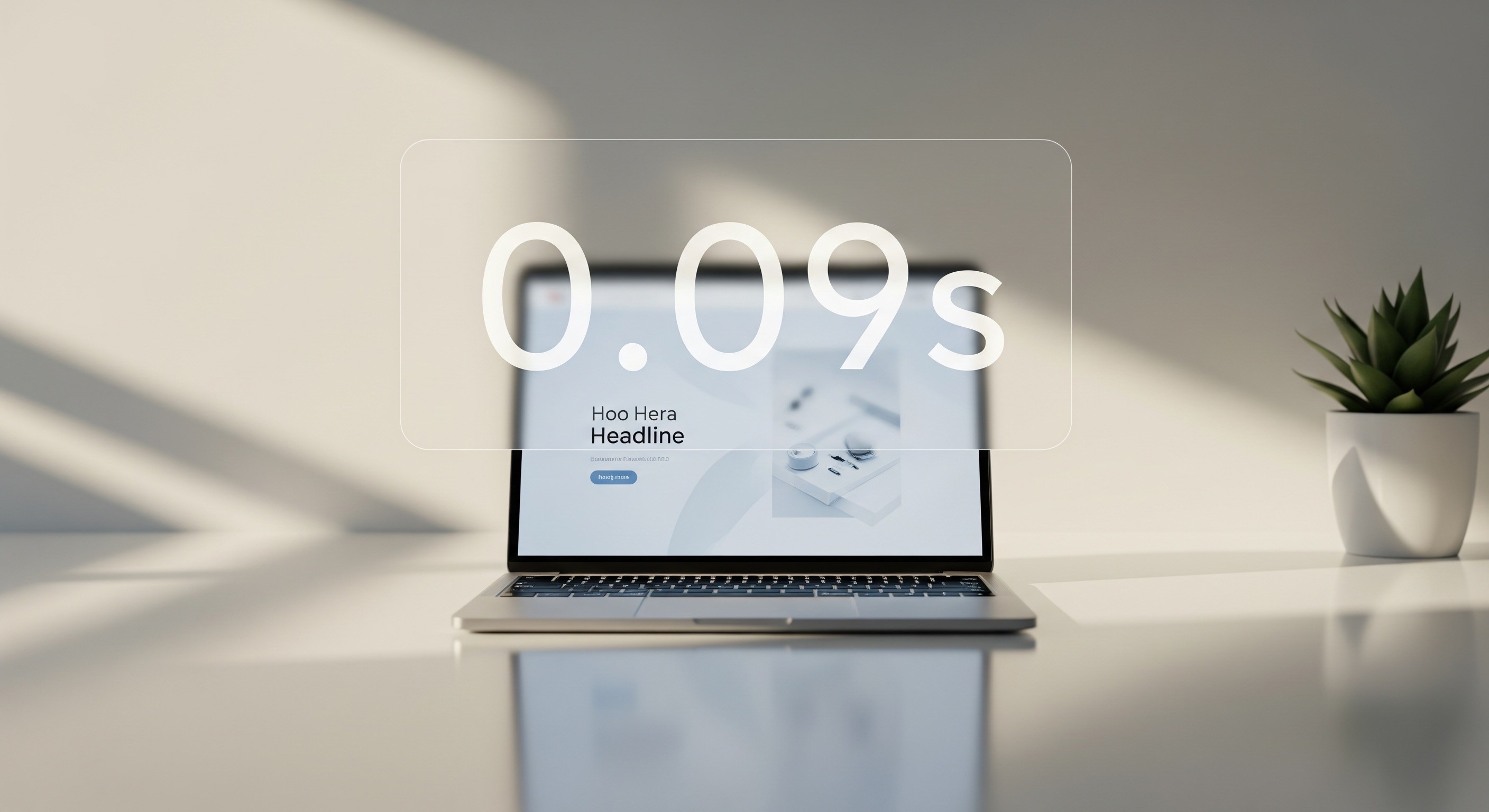
When someone opens your website, they decide whether to trust you before they finish reading a single sentence. Research from the Behaviour and Information Technology Journal (Lindgaard et al.) puts the number at roughly 0.05 to 0.09 seconds. That is faster than a blink. Faster than conscious thought. In that tiny window, the brain sorts your site into one of two categories: credible or not. Modern or dated. Worth my time or not. Everything that happens after — the reading, the scrolling, the deciding — is shaped by that first gut reaction. This post unpacks the science behind those snap judgments and shows what design teams can actually do about them. It is written from the perspective of a Stockholm-based design studio that builds brands and websites for founders who care about trust as much as aesthetics.

Ishrat Aftab Ananya
Content Writer
What Happens in the 0.09-Second Window
Humans are visual creatures first and rational creatures second. When your page loads, the brain does a rapid visual sweep before any conscious thought kicks in. It is looking for patterns and threats, the same way our ancestors scanned a landscape.
In that half-blink, users are unconsciously reading signals like:
Overall layout structure and balance
Typography — does it feel considered or thrown together
Colour contrast and harmony
Whitespace and spacing rhythm
Density of text and images
Cues of quality, such as photography, iconography, and craft
None of this is verbalised. The user does not think, "interesting typographic choice." They think, "this feels right" or "something is off." By the time they scroll, the verdict is already in.
Why Visual Hierarchy Builds Confidence
Hierarchy is the single biggest lever for trust. A strong hierarchy answers three questions before the user asks them: where am I, what is this, and what should I do next.
When spacing is consistent, when headings stand apart from body text, and when the primary action is obvious, the user feels guided. When hierarchy is weak, the brain has to work — and working feels like risk.
Most sites that feel "cheap" are not low on budget. They are low in hierarchy.
Consistency Is a Silent Trust Signal
Inconsistency is expensive. Buttons that behave differently on different pages. Headings that shrink and grow without reason. Two fonts are doing the same job. Each small mismatch adds a micro-dose of cognitive load, and cognitive load reads as risk.
Consistency is the quiet work that makes a website feel stable. It is why Scandinavian brands — from Spotify to Klarna — feel so polished. The individual elements are not flashy. They are just reliably consistent across every screen.
Speed Is Part of Design, Not an Engineering Detail
A slow site loses the first impression before the first impression begins. Google research shows the probability of a bounce jumps 32 percent when page load time goes from one to three seconds, and 90 percent at five seconds.
Performance is a design decision. It shows up in image sizing, in font loading strategy, in how much motion you ship, in whether you choose a lightweight stack or a bloated page builder. Fast feels premium. Slow feels careless, even when the design is beautiful.
Clarity Over Complexity
A cluttered homepage signals confusion. Users land, scan, and look for one thing: can I understand what this company does in under five seconds? If the answer is yes, they stay. If the answer is no, they leave, and they rarely come back.
The homepages that convert are not the ones with the most features. They are the ones who say one thing clearly and make the next step obvious.
What This Means for Your Website
If you want a site that earns trust in under a second, pay attention to the fundamentals long before you think about animation or visual flourish:
A simple, calm layout with intentional whitespace
Typography that is readable, consistent, and sized for hierarchy
Load times under 2 seconds on mobile
A clear primary message within the first 500 pixels
One obvious next action per page
Consistency across every screen, not just the homepage
Design is not decoration. It is a psychological handshake. In under a tenth of a second, users are deciding whether to stay, and everything else depends on whether you earn that moment.
Frequently Asked Questions
How long do users really take to form an opinion about a website?
Research by Lindgaard et al. and later studies by Google suggest 0.05 to 0.09 seconds for visual judgment, and up to 2.66 seconds for a more considered trust decision. In either case, the first impression is formed before the user reads anything meaningful.
What affects first impressions more: design or content?
Design. The visual system processes layout, colour, and structure far faster than language. Content takes over after the first impression has already been formed — so if your design fails, your best writing will never get read.
What is the single biggest first-impression mistake?
Visual clutter. Too many competing elements, weak hierarchy, and too much to look at all at once. A calm, clear page almost always outperforms a busy one, regardless of industry.
Does website speed affect trust?
Yes, directly. A slow-loading site is perceived as less professional and less secure, even by users who cannot articulate why. Speed is one of the most underrated trust signals in modern web design.
How can a small business improve first impressions without a full redesign?
Focus on three things first: cut the clutter on the homepage, tighten the typography hierarchy, and compress images so the page loads in under 2 seconds. These three moves alone usually lift trust signals significantly.
Webray Studio is a Sweden-based website studio that helps brands win trust through clarity. If your website is not converting the way it should, the first place to look is the first impression.
More blogs.
Explore our collection of insights — from quick, actionable tips to in-depth explorations of design, development, and the evolving world of digital work.